This article was originally published on LinkedIn.
Product Platforms and Industrialized Construction (3/3)
Or how we can solve the housing crisis - Part 3: Parametric Software Workflows
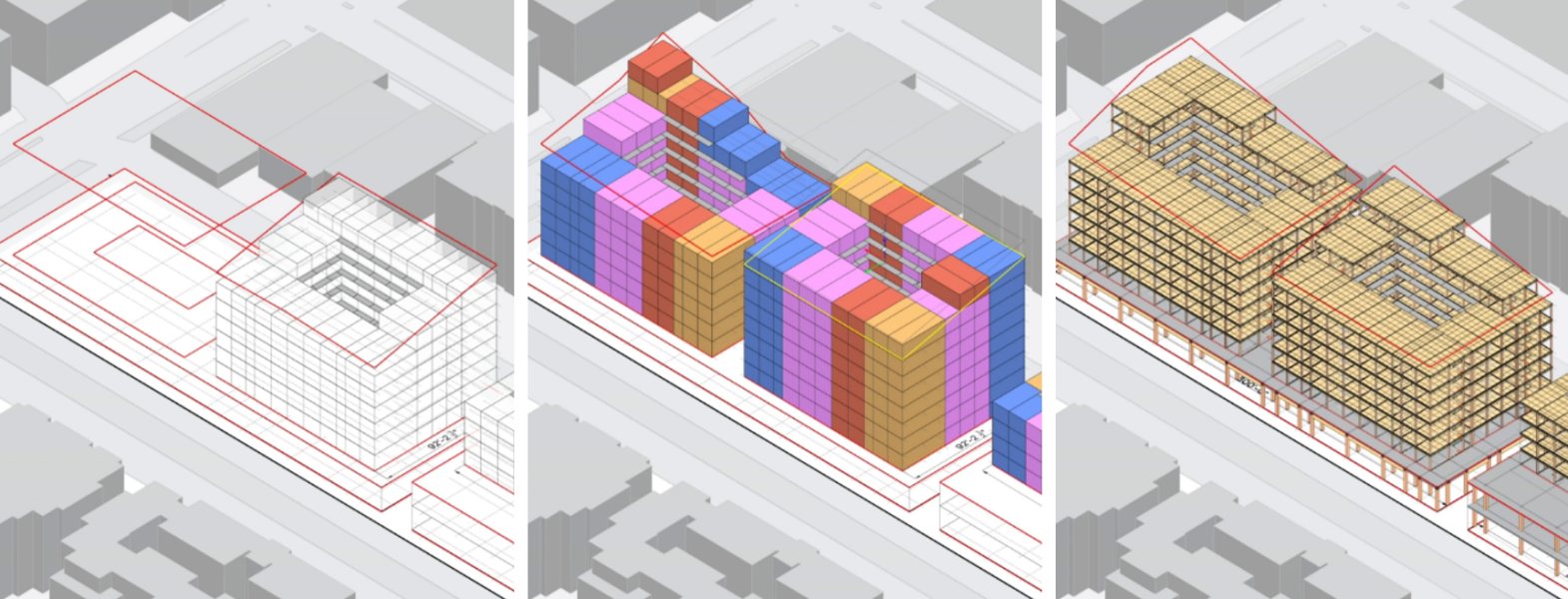
In my last two articles, I talked about the principles and methods of product platforms for construction, and what they mean for manufacturing adaptability and technology. In my third article, I will talk about how product platforms can be enabled through parametric software tools.
Software is the "glue" to all we do. It certainly is at Intelligent City. Whether we are planning and documenting product platforms, or developing design-to-manufacturing workflows, our success comes down to how data is generated and translated from early feasibility studies to project planning and to manufacturing. When developing a product platform, software automation becomes both easier and more important at the same time, because it enables us to work within the design space of our platform while ensuring the data structure for manufacturing is maintained.
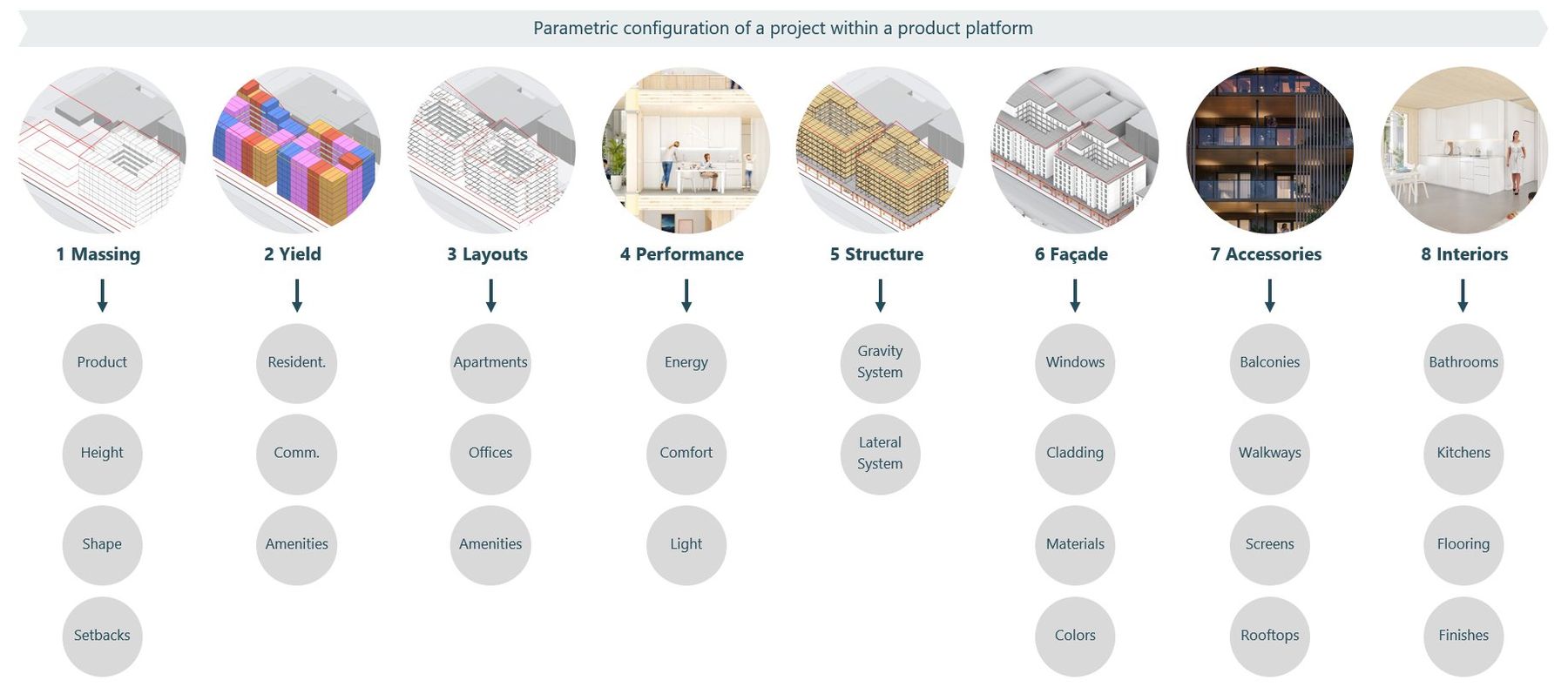
And due to the customization our product platform allows, integrating parametric design principles is fundamentally driven by the need for flexibility. Here are three principles we can apply when developing design and manufacturing automation around product platforms:
- Customization through Modularity: Product platforms in construction are about creating a set of core components that can be reconfigured or adjusted to meet diverse project requirements. Parametric design, being inherently flexible, enables the creation of these modular components. By changing parameters, we can adapt designs to different specifications or customer needs without starting from scratch, and without leaving the "design space" or "solution space" of the platform.
- Automation and Augmentation: There are different levels of automation when it comes to designing buildings. Once we establish the rule set of our platform, we can start automating "backwards", starting with manufacturing instructions, and working our way towards automating building details, BIM models, and finally, the design process. However, we need to be careful not to over-automate: design decisions have to be augmented, not automated, so that enough user control is possible.
- Programming Platform Rules: A key benefit of product platforms is the standardization of components, which ensures consistency in quality and performance. Developing automated software workflows inherently requires such clear rules and relationships between different design elements. Even as designs are customized or scaled, these rules ensure that the core standards of the platform are upheld.
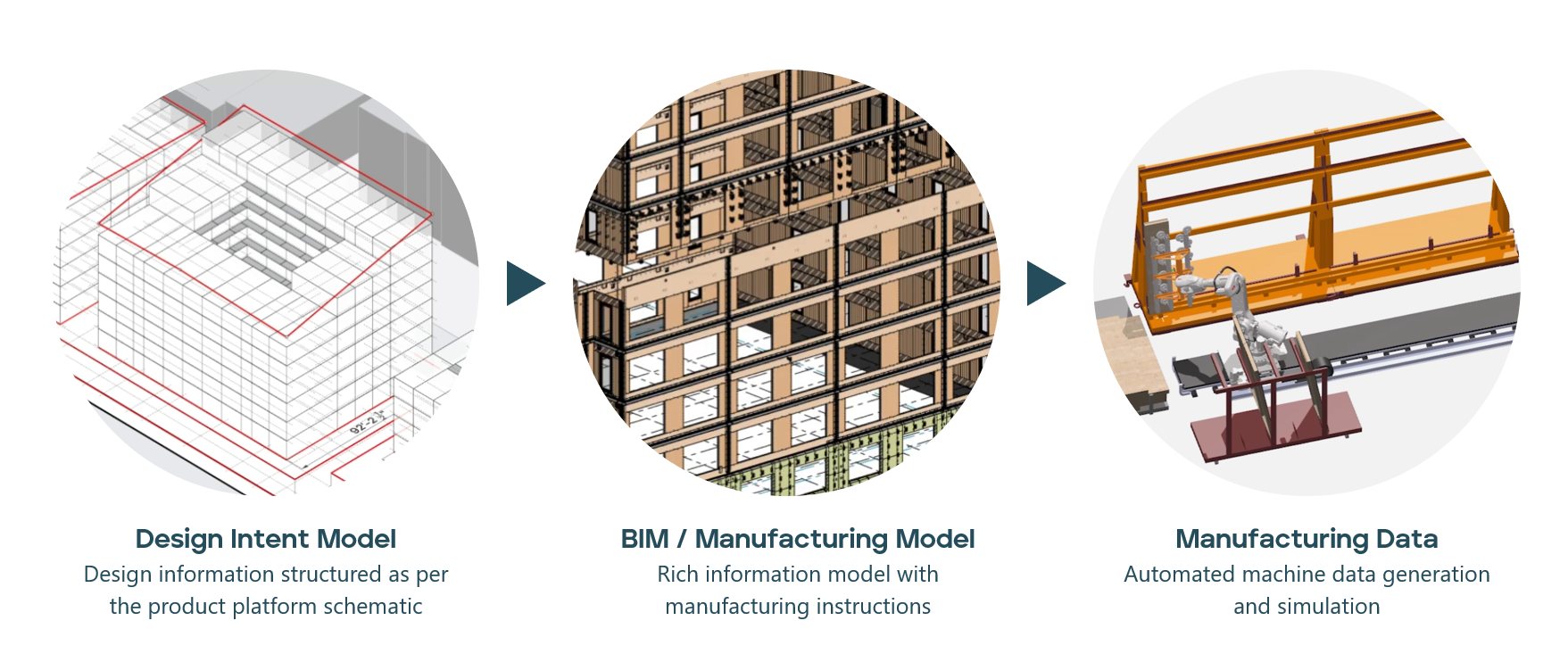
If set up properly, parametric design workflows are a triple-win. First, they force us to think in a systematized way and to define rules for every building part and every component, which is exactly what a product platform needs. Second, they allow us to quickly iterate through viable options without leaving the product platform's design space. And third, this means that designs can be optimized based on performance data, user feedback, or environmental conditions, leading us to smart and potentially automated decision making.
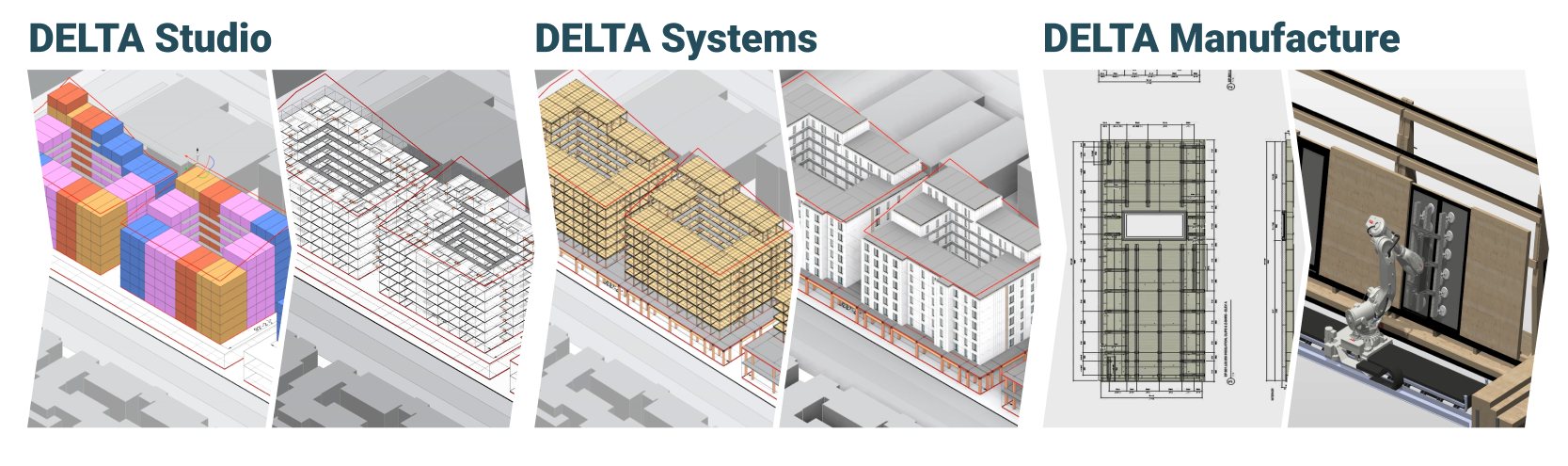
At Intelligent City, we developed a pipeline of parametric tools that allow us to automate and augment the entire workflow from design to planning and manufacturing. With this strategy, we introduce stage gates, approvals, and allow for manual intervention and adaptation when needed:
- DELTA Studio: A parametric design tool for building massing, layouts, apartment mix, and data analysis for cost and carbon. It follows the logic and schema of our product platform.
- DELTA Systems: The automated generation of parametric building components for a full virtual twin. Using the design intent in DELTA Studio, it populates the building design with actual building parts.
- DELTA Manufacture: The generation of manufacturing information such as machine code, fabrication drawings, and ERP links, using the parts and components generated in DELTA Systems.
I'm not going to lie, it is a herculean task to develop such a comprehensive system, and we still have a lot ahead of us. However, having gone through countless design iterations of dozens, if not hundreds, of buildings in the last years, we now have the capability to significantly accelerate all stages of the design and planning process. I'm especially excited how far we were able to push manufacturing automation workflows to practically instantly generate machine code from a 3D model.
The most important thing is that we have systematized our approach to designing buildings and our software is helping us to stick to the rules. Ultimately, this allows us to scale up the design and delivery of housing, which is at the heart of our company's mission.