This article was originally published on LinkedIn.
Product Platforms and Industrialized Construction (2/3)
Or how we can solve the housing crisis - Part 2: Manufacturing Innovation
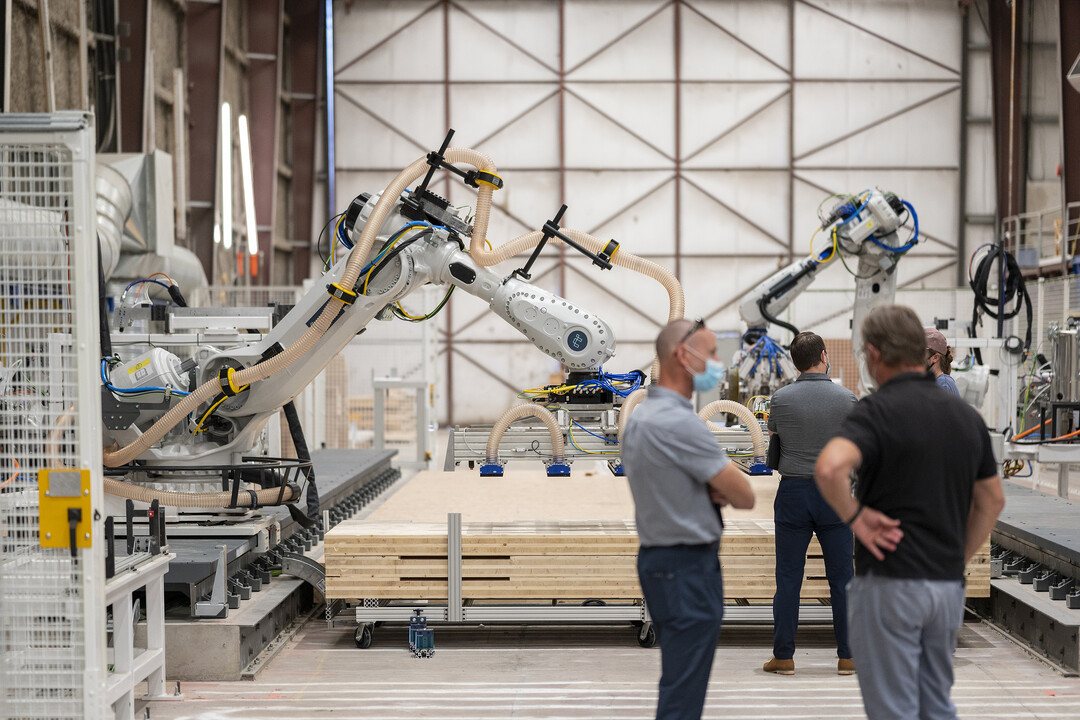
Let's talk about manufacturing for industrialized construction! In my last article, I touched on the development of product platforms for high-rise mass timber construction. The journey of engineering a comprehensive range of components for multi-family buildings is a complex and market-driven endeavor, spanning several years. But most importantly, this process is not only about design; it crucially hinges on the feedback and capabilities of manufacturing technologies, where customization plays a key role.
Standardization and Customization
Traditionally, Design for Manufacturing and Assembly (DfMA) was somewhat isolated from the core design process in construction, often relegated to being a supplier's concern. However, as we industrialize our industry, it becomes an integral part that cannot be ignored, and often a driver for innovation. It becomes increasingly relevant in the context of product platforms, where finding the right equilibrium between standardization and customization is essential.
Product platforms, which are essentially a collection of common elements and technologies implemented across a range of products, benefit significantly from early consideration of manufacturing capabilities and constraints. This integration ensures that the product platform is not only innovative in design but also practical and efficient to produce. At Intelligent City, the range of our products is defined by building typology and height, influencing apartment options and structural systems. Our building components can accommodate this variation without changing their fundamental logic.
When considering each individual part in our building system, we evaluate the level of customization:
- Standardized: no variation
- Discrete Variation: e.g. 6 or 12 discrete variants
- Parametric Variation: e.g. a range between min. and max.
(credit goes to Kai Aurelien Zhu for pointing this out a while ago)
Parametric Manufacturing
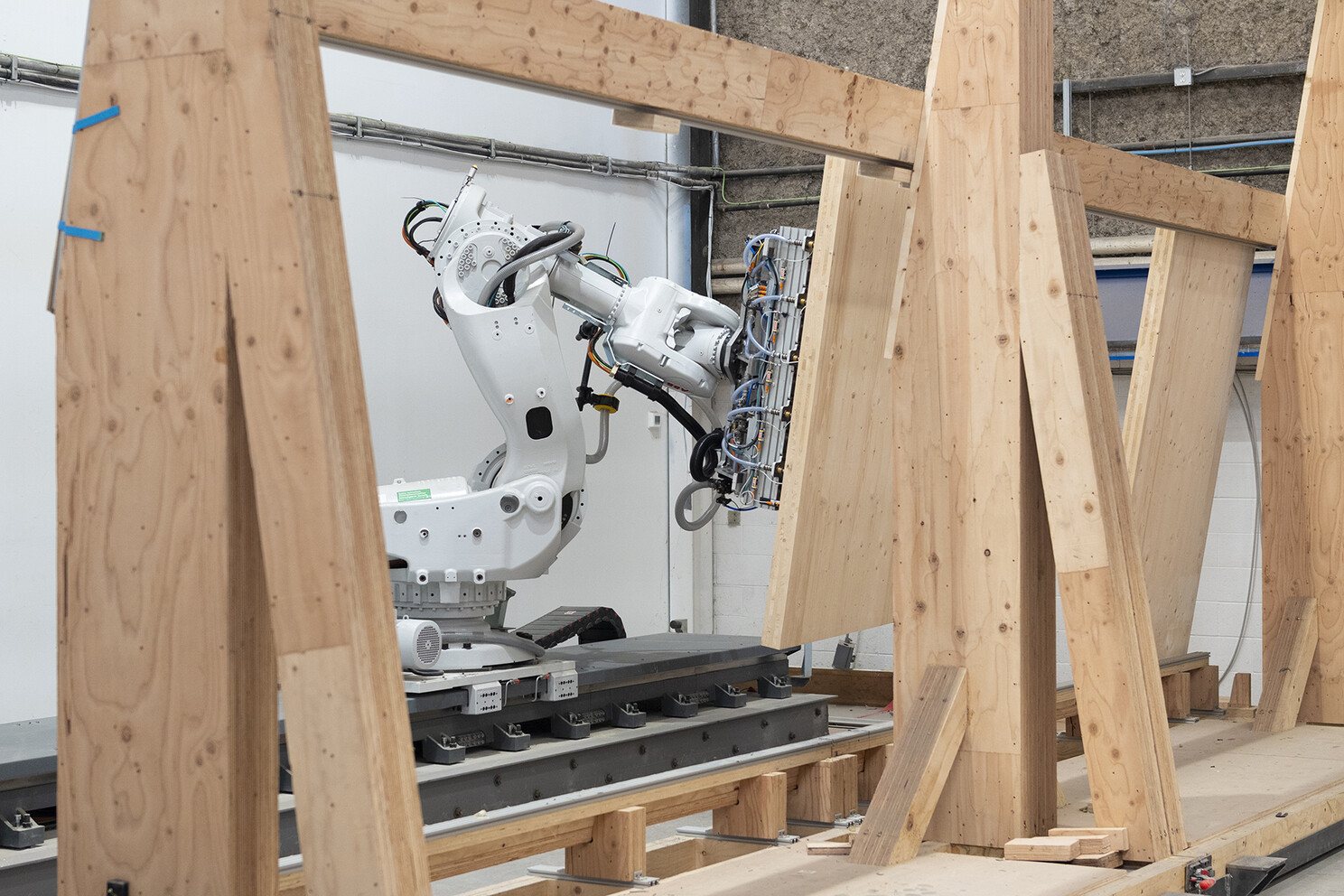
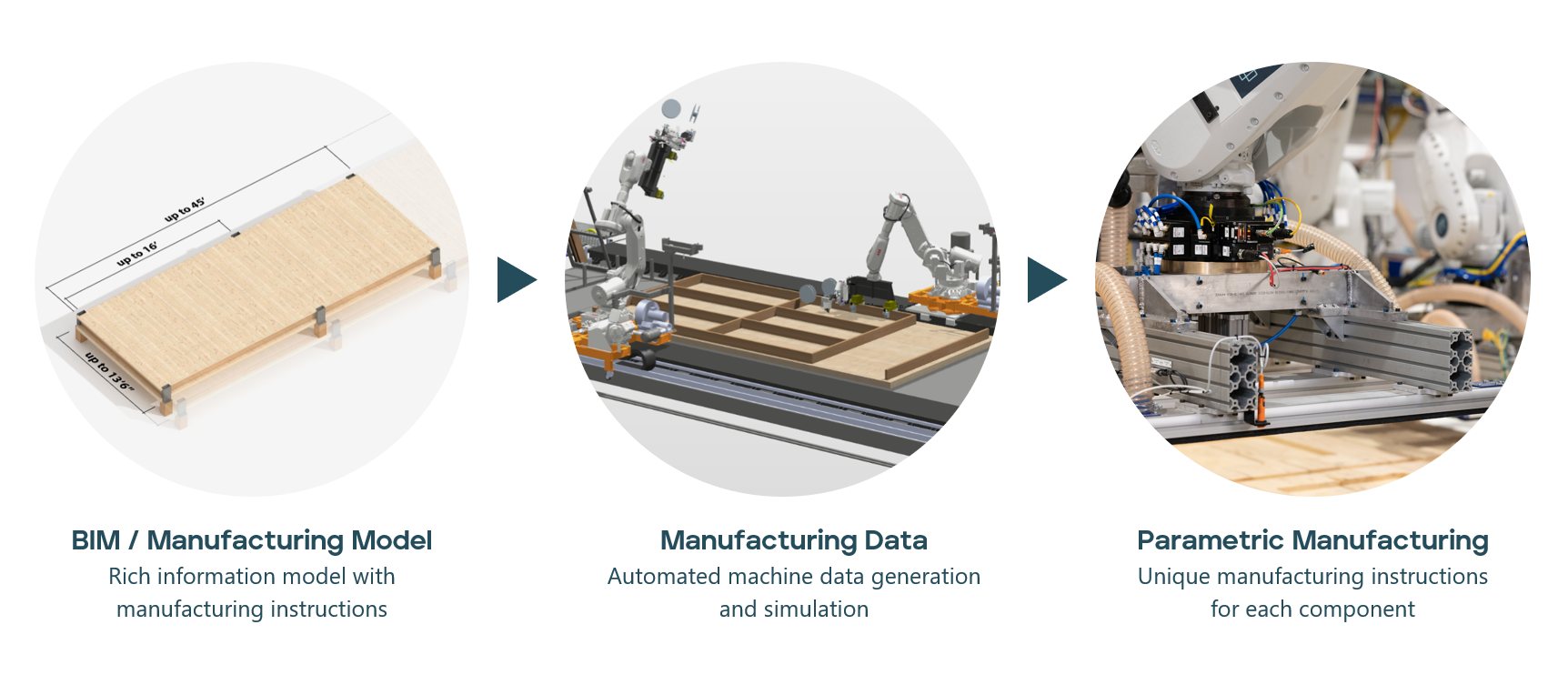
The role of customization is particularly pronounced in multi-family housing, vital for catering to diverse customer needs and unique project specifications. This necessity for customization underscores the importance of flexible manufacturing processes. Parametric manufacturing, which leverages computer-aided design and manufacturing technologies, emerges as a solution. Instead of relying on standardized manufacturing processes (or a discrete number of variations), parametric variation necessitates a unique set of machine instructions for each part or component. This, in turn, requires machines that can accommodate a higher degree of variation than we typically see in industrialized manufacturing.
Standardization of Process, not Parts
At Intelligent City, we developed manufacturing solutions using industrial robots that allow us to transmit custom manufacturing instructions for every single building component without adding complexity to the overall data infrastructure. This variability allows for the customization of building components within the constraints of the product platform. It is particularly beneficial when each component might need to be tailored to specific dimensions or functional requirements while maintaining the same underlying logic. While some parts are fixed or have a limited number of variations, other parts are completely parametric and can vary from component to component.
In my next post, I'll delve deeper into how DfMA within product platform development enables a seamless transition from design to production. This integration is particularly evident in software development, where manufacturing data can now be intrinsically linked to design models, erasing the traditional divide between building design, or configuration, and manufacturing information.
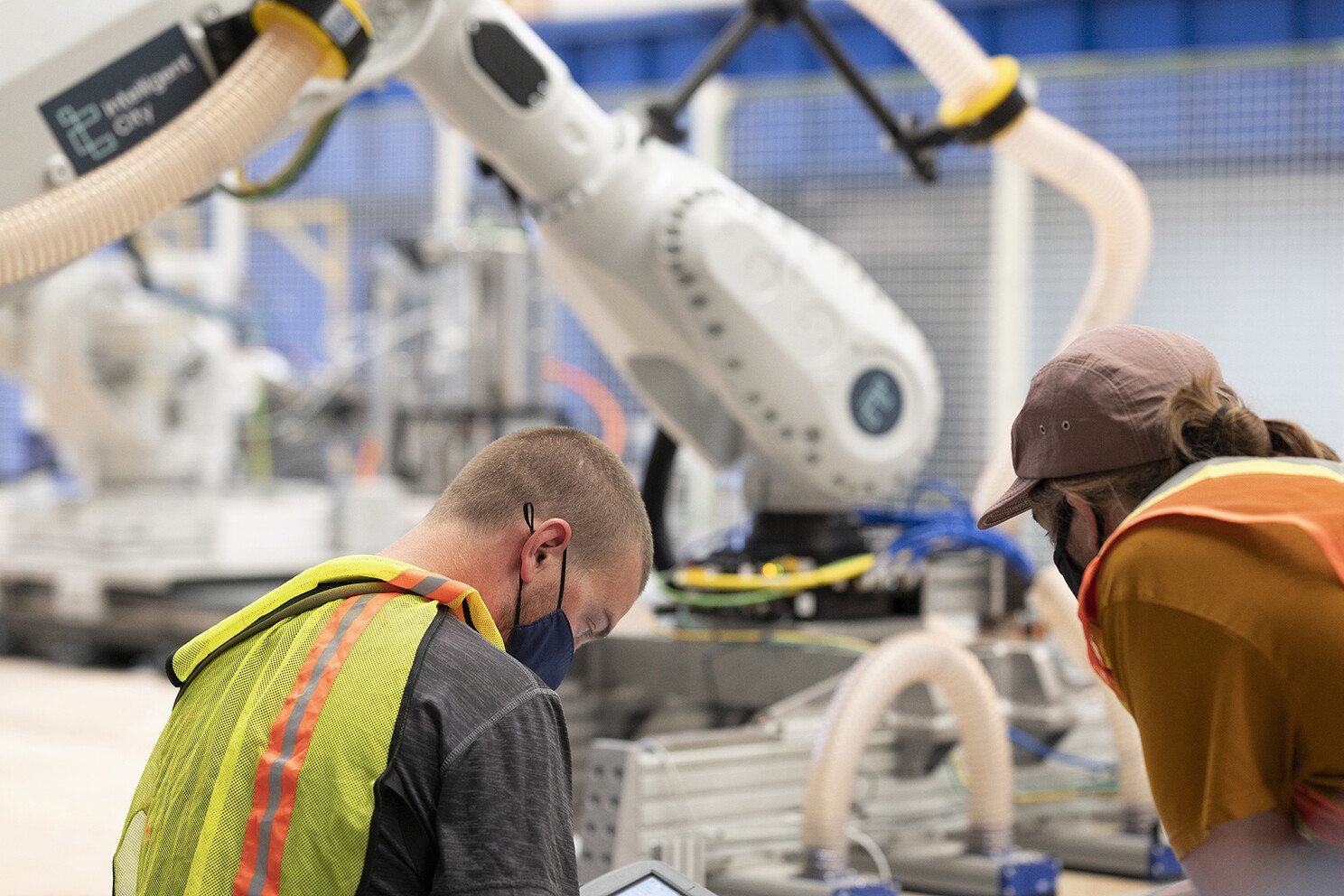
Intelligent City is currently ramping up production for our first project. Stay tuned for more images, videos, and insights from our pilot factory!