This article was originally published on LinkedIn.
Growing the mass timber industry in Canada
Canada can build an all-Canadian value chain from forests to cities. Where government can create the demand, and where it can help build the supply.
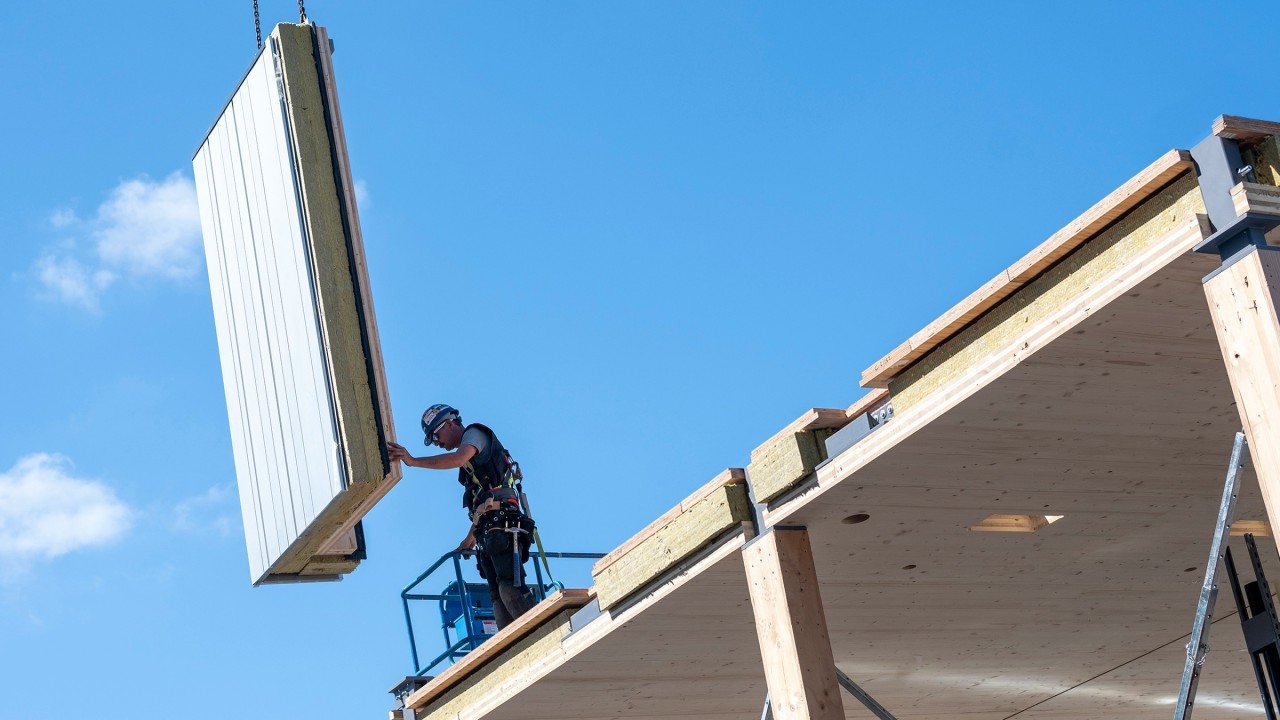
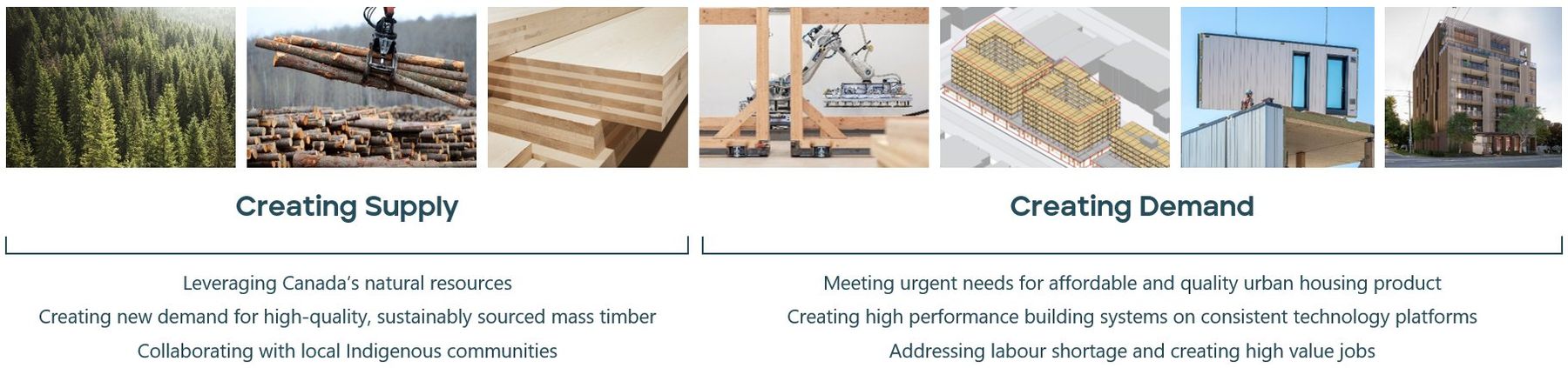
Canada has the unique opportunity to build an all-Canadian value chain from "forests to cities" by both creating demand on the one end, and supply on the other. Not only would this help to build housing faster, at lower cost and with higher quality, but it would also ensure that Canada will be a leader in manufacturing, AI, robotics and construction.
At Intelligent City, we believe some of the opportunities where the Liberal Party of Canada leadership would be catalytic to a "Made in Canada" approach are:
Creating demand
Public Procurement
Urge Public Services and Procurement Canada (PSPC) to adopt Made in Canada mass timber buildings and components as part of the Greener Federal Building strategy, for both new builds and retrofits. Unleash Canada Lands Company to explore innovative new ways to accelerate the development of more affordable housing and communities using modular, prefabricated, and mass timber construction.
De-risk Prefab Investments
Establish modular-specific zero or low interest loans, performance bond guarantees, support for construction finance lenders, and other new financing mechanisms to help unlock offsite prefab manufacturing. Applying the learnings from the renewable energy sector, the government could backstop loans for modular projects through Canada Mortgage and Housing Corporation (CMHC), expand the Investment Tax Credits (ITCs) to include mass timber buildings, and incentivize real estate asset owners to adopt mass timber buildings through mechanisms such as a Contract for Difference (CFD) or something more akin to a renewable energy Feed-In-Tariff (FIT) to provide greater certainty on project economics.
Cut Taxes & Red Tape
Federal, Provincial, and Municipal governments need to work together to cut the red tape, eliminate barriers and reduce development and permitting costs. Initiatives such as:
- Cut Development Fees & Taxes: Work with municipalities to cut Development Fees (or Development Charges) for multi-unit residential housing. Eliminate GST on new builds and provide additional tax incentives to speed up development of affordable rental housing. If you want to learn more about why we have these fees and taxes, check out a great YouTube video: The Housing Tax Crisis.
- Digital Applications & Permitting: Shift to digital-first applications and permitting to save time and money. Standardize the application and permitting procedures across jurisdictions to reduce confusion, delays, and inefficiencies.
- Increase Density: Encourage higher density housing projects to maximize land use and expedite construction. As an example, the BC Building Code now permits encapsulated mass timber construction (EMTC) up to 18-storeys, an increase from the previous limit of 12-storeys, with the City of Vancouver's further incentivizing mass timber construction by allowing for two extra storeys for buildings in areas zoned for 8 to 11-storeys, or three additional storeys for buildings in areas zoned for 12 or more storeys.
- Amend Restrictive Zoning: Revise zoning laws to allow for greater density, especially near transit hubs and schools to facilitate faster housing development.
Advance Commitments
Encourage investment in new manufacturing through Advance Market Commitments (AMC) and long-term offtakes with Canadian mass timber manufacturers to increase demand and provide a guaranteed market in the future. Potential to link this into PSPC procurement.
Certification & Accreditation
Modular prefabricated mass timber factories should seek third-party verification to ensure quality, consistency, and safety, thereby increasing the confidence of investors, developers, general contractors, and long-term real estate asset owners.
Modernize the Canadian Lumber Industry
Promote sustainable forest management and invest in the modernization of mass timber manufacturing facilities to create a reliable and cost competitive Canadian value chain. Incentivize the industry to invest in higher value, engineered timber products (e.g., Cross- or Glue-Laminated Timber, Laminated Veneer Lumber).
Creating supply
Build Capacity
Create new (or adapt existing) investment vehicles to finance emerging technology companies and support manufacturing expansion. Provide equity, debt, and project finance to unlock Canada's mass timber value chain and encourage institutional and strategic investors to engage. Utilize the existing Federal government financing partners such as the BDC, Export Development Canada, PSP Investments / Canada Growth Fund (CGF), Natural Resources Canada (NRCan), National Research Council Canada and other agencies to provide industry-specific solutions, alongside other Provincial, Municipal and inter-governmental funding partners.
Workforce Development & Upskilling
Address the shortage of skilled workers in advanced manufacturing, automation, AI and robotics. Invest in and promote modular and timber-specific curriculums and factory training in academic and skilled trades programs across Canada. Collaborate with Canada's First Nations and Indigenous communities to ensure shared prosperity.
Invest in Canadian Innovators & Value Chain
Provide financing support to emerging technology companies with investment, government-backed loans and underwriting facilities, and project financing solutions to expand capacity and better serve partners across Canada. Strategic support of this kind for mass timber innovators in Canada, will help to solidify Canada's leadership in the space. It will also ensure that high-quality and affordable homes can be delivered across the country, while building the foundation for a new, high-value export market, through a resilient, all-Canadian value chain.
It's time to build
We believe Canada has a unique opportunity to build more, and build better. By combining renewable and sustainably managed resources and modern manufacturing technologies, we can deliver housing that is affordable, sustainable, and locally made.
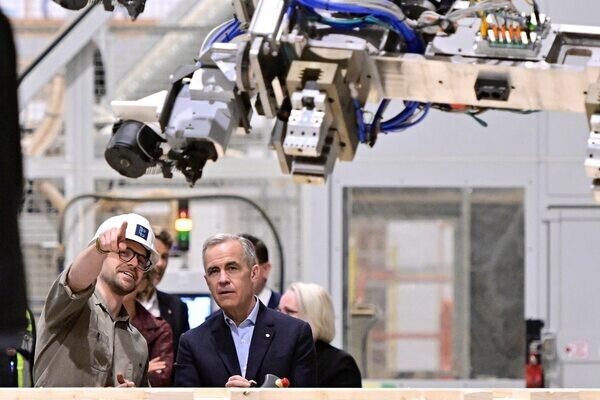
"You [Intelligent City] are the future of housing construction in this country. This is exactly the type of innovation that we need to tackle the housing crisis."
Prime Minister Mark Carney (April 8, 2025)
We're proud to be building this future today, and we welcome collaboration with all levels of government (Federal, Provincial, and Municipal) and community partners who share our vision: housing solutions that work for people, the economy, and the planet.
Let's build the homes we need for a more affordable tomorrow. We're ready.