This article was originally published on LinkedIn.
AEC start-ups are failing. We shouldn't panic.
A dozen bankruptcies sound scary. In an industry that is reinventing itself, they are what progress looks like.
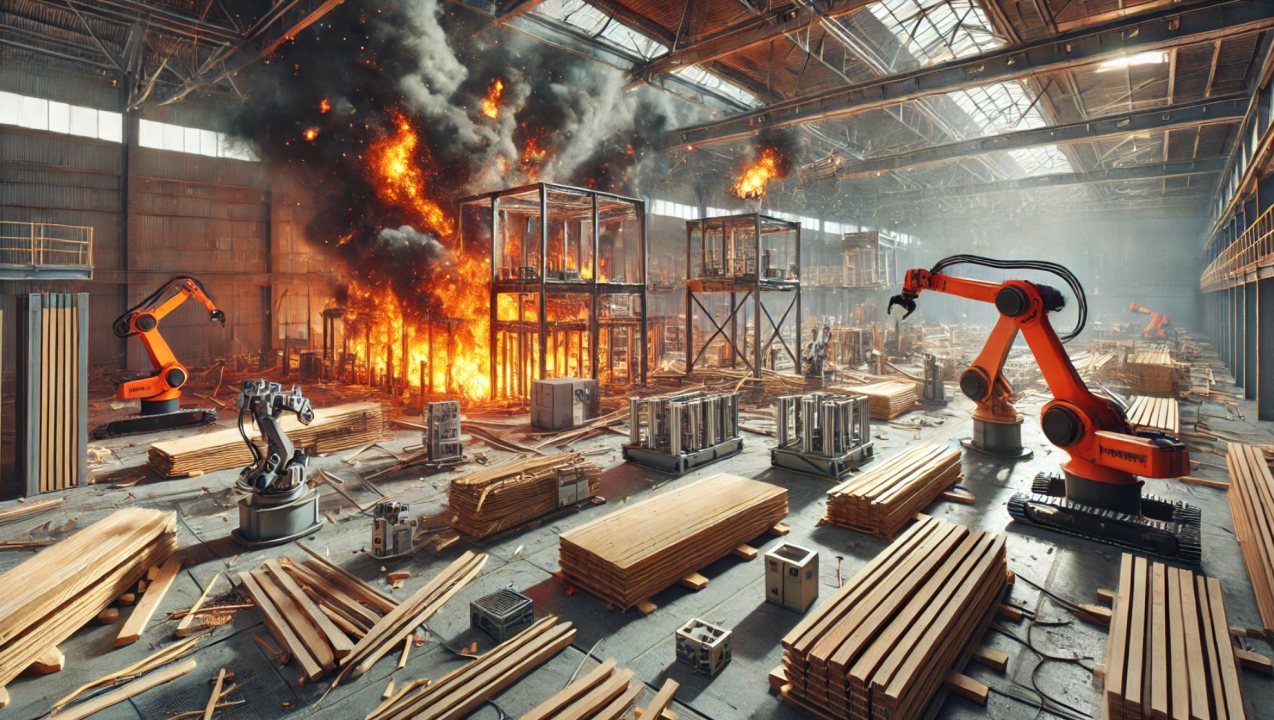
"BREAKING: Another prefab startup goes bankrupt! This business model is clearly doomed!"
You've probably seen news and social media posts like this in the past months. I have two major problems with this take that I wanted to share for a while now. A dozen bankruptcies and failures sound scary, but they should not lead to panic. Why?
(1) Failing is normal
What we tend to forget is that a lot of companies fail, small and big. We usually focus on the few successful companies, or on those that are on the brink of success and could go one way or another, because that's exciting. But we can't focus on the hundreds of other companies that didn't make much noise. Let's go back to basics:
- 9 out of 10 startups fail.
- Of those that fail, 2/3 don't reach a Series A, and 1/3 don't reach a Series B.
- Not only startups fail. 70% of ALL businesses fail within the first 10 years.
Let's take another perspective: In Canada alone, over 600 construction companies filed for bankruptcy in 2023. That's 12 bankruptcies per week. Did we hear about those? Probably not.
(2) We are in the middle of an industry disruption.
When new technologies allow an industry to re-invent or disrupt itself, we will see a lot of startups emerge. And a lot of them fail. Yet, the industry as a whole, is making progress.
- In the beginning of the 20th century, over 1,900 car companies were founded. And as you know, only a handful are left. You thought Ford was the only one with a good idea? There were hundreds with similar ideas, but they didn't succeed (as much).
- The aerospace industry looks similar: There are over 400 aerospace startups. Many heard of Virgin Orbit go out of business, but have you heard of Kleos, Masten, Momentus, SpaceRyde, or Pioneer Aerospace Corporation? Lots of bankruptcies and yet the industry is thriving.
- In a more recent example, many have noticed that AI could be a bubble about to burst. But, as Casey Newton from Platformer rightly points out, we are likely going through the typical phases of the venture capital life cycle, and the impact of AI will keep growing.
(3) What does that mean for MMC in AEC?
It may be unfamiliar to us in the AEC industry to observe so many failures because we're not used to an industry re-inventing itself. In my mind, that's actually good news!
These are world-wide statistics. Is the AEC industry different? I would argue it's even harder to build a successful business in our industry because of its cyclical nature and unique local requirements even within a narrowly defined market.
Don't think an industry is failing because you see bankruptcy announcements. If anything, this means that our industry is actively working to re-invent itself, and the more people try, the more likely we will see success in the long term.
What could be some of the reasons we have seen failures? Here are some of my takes:
- Product-market fit: What is it really that developers / architects / builders are looking for? Will your technology or service decrease risk in the short term?
- Impatient capital: Innovation in our industry takes a long time. To show proof in the market (aka a building) it may take many years. How can you show traction or revenue quickly?
- Industry expertise: Other industries may have more experience in manufacturing or product development, but don't de-value expertise in construction and RE development.
- Don't do too much: Reinventing the entire value chain of real estate may distract you from adding value to specific aspects.
Instead of panicking, we should learn from these failures, have open discussions, and build a better future, together!
Why do you think we have seen so many recent failures? Share your thoughts!